Same Desk. Same Customer. Nothing's The Same
Same Desk, Same Customers, Same Broken Coffee Machine
Why the hardest part of change is the part nobody puts on the calendar.
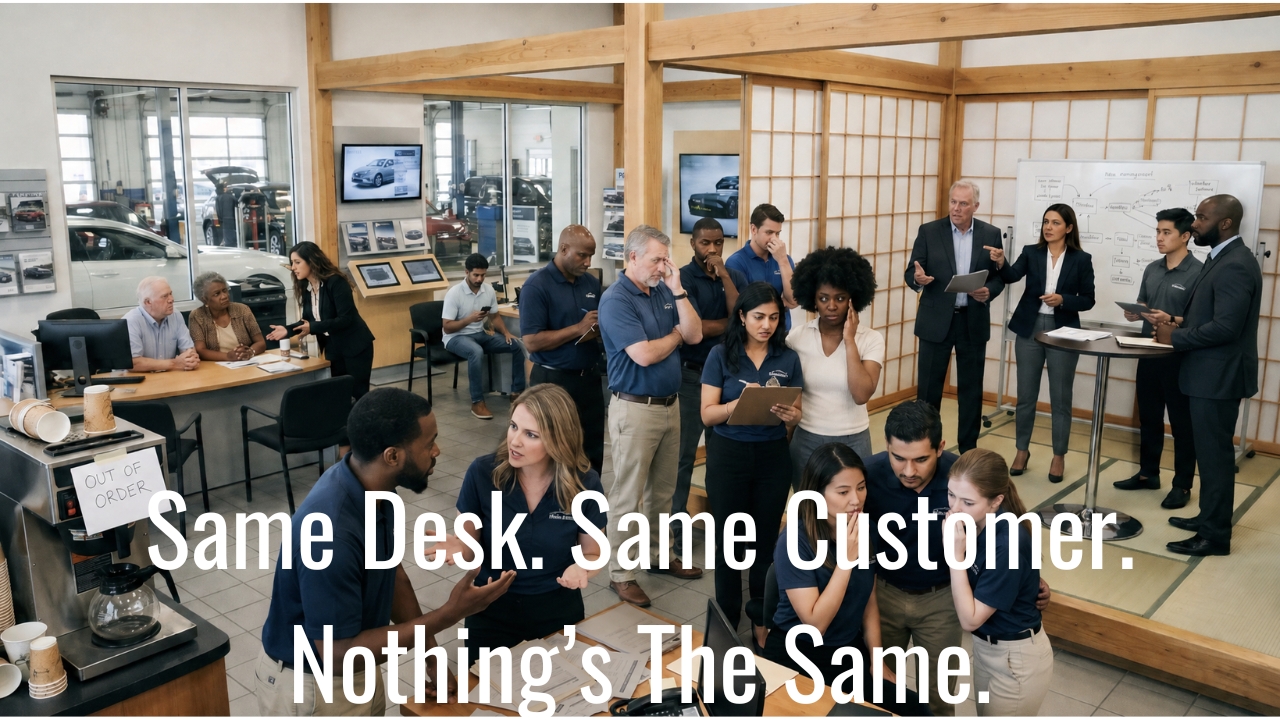
It's Monday morning. New logo on the building, new owner in the conference room. Same desk. Same customers. Same broken coffee machine.
And somehow nothing feels the same.
Change Happens on a Date. Transition Does Not.
William Bridges spent decades studying this and wrote about it in Transitions and Managing Transitions. His idea is simple: change and transition aren't the same thing.
Change is the external event — the sale closes, the pay plan takes effect, the org chart gets redrawn — and it happens on a date you can circle on a calendar. Transition is the internal process of coming to terms with it, and it runs on your timeline. Your nervous system never got the memo.
It Starts With an Ending
Bridges described three phases, and the order catches people off guard: an ending, then a stretch he called the neutral zone, and what I call “The Messy Middle”, and only then a new beginning.
Most of us want to skip to phase three. Announce it, hang the banner that says "Exciting New Chapter," then wonder why half the room looks like they're at a funeral. Something real just ended.
Think about what ends when a store sells, even when the new group is terrific. The owner who knew your kids' names. The unwritten rules about how deals actually got done. None of it's in the purchase agreement. A pay plan change is the same: what ends isn't a formula, it’s knowing what your family can count on each month.
The Endings That Hit Hardest
The deepest endings touch identity. Picture the technician who spent twenty-five years being the person everyone brings the weird problems to. EV training arrives, and his first question isn't "Can I learn this?" It’s "If my old expertise matters less, who am I now?" Or the top salesperson watching her leads route to a BDC before she ever sees them and can manage the first contact.
They’re not being stubborn. They’re losing a sentence they’ve said for years: “I’m the one who knows how it’s done.”
What Stays The Same Matters As Much As What Changes
Here’s where the research gets useful. Steffen Giessner at Rotterdam School of Management studies how people adjust to mergers, and the pattern is consistent: employees who feel their old identity carries forward accept change more easily.
One finding belongs on every manager's mirror: a bonus by itself doesn’t fix a threat to identity. You can’t pay somebody out of the feeling that they no longer know who they are at work. What helps is explaining why - people who believe a change was truly necessary carry less uncertainty.
Which makes this the most underrated sentence in leadership: "Here’s what is different, and here’s what’s staying the same."
The Neutral Zone Is The Part Nobody Schedules
After the ending comes the neutral zone - what I call “The Messy Middle”. The old way is gone. The new way hasn’t clicked yet.
Picture an elevator stuck between floors. You can’t get back to the floor you left, the doors to the next one haven’t opened, and somebody keeps pressing buttons like that’s really helping.
This is where energy drops, productivity dips and the break room becomes a tabloid news network with no fact-checkers. Bridges argued this “Messy Middle” is where most changes fail — not because the plan was bad, but because nobody helped anyone through it.
About That Change Curve
You’ve probably seen it in a leadership seminar: denial, anger, bargaining, depression, acceptance. It comes from Elisabeth Kübler-Ross's 1969 book On Death and Dying, and it described terminally ill patients. Not employees. Not dealerships. Certainly not pay plans. Kubler-Ross herself said the stages were never a tidy sequence. But stages of grief in losing a person and sometimes a professional identity or certainty can follow a similar pattern.
So treat it as vocabulary, not a map. And don’t tell a coworker they’re "in the anger stage." That lands about as well as like telling someone to “just calm down.”
Getting Through The “Messy Middle”
Three things move people forward, and none require a “Breaking News!” announcement.
First, name what ended, out loud and specifically. "The old system" is too vague. "Being the person everyone came to" is specific, and specific is workable. Then honor it. That role gave you something, and naming it isn’t weakness. It’s creating closure.
Second, name what’s staying. Your skills. Your reputation for doing the job right. The customers who ask for you by name. Your brain needs something solid and familiar to stand on.
Third, take one small step this week. One piece of the new process learned. One conversation with the new manager. Small wins are mastery experiences, and that’s how footing gets rebuilt.
If you lead people, there’s a fourth. Ask one teammate what this change ended for them, then listen. Don’t fix it. Listen. Much of the resistance in your store is just a person waiting to be heard.
This Is Auto Dojo Work
All four pillars show up right here. Respect for the individual means you don’t tell a twenty-five-year veteran to “get over it.” Ethical influence means the ethical warrior doesn’t manipulate people through a change — they help them make sense of it. And process mastery gives you something solid to stand on while everything else moves.
Mindset drives behavior. The skills follow.
Why This Matters
An ending you never acknowledge doesn’t disappear. It follows you into the next chapter dressed as impatience, cynicism or the quiet withdrawal of somebody technically still here but their mind and motivation have left the building. Naming it frees the energy you’ve been spending holding on to what’s already gone.
The new beginning never shows up at a meeting. It shows up when people start doing it the new way without being asked.