
The 7/38/55 Rule
The 7/38/55 Rule
Why 93% of Your Sales Power Has Nothing to Do With What You Say
Picture this. You just texted a hot lead back in under two minutes. Fast reply, right answer, perfect grammar. And... nothing. Crickets.
Meanwhile, your buddy at the next desk picked up the phone, said "Hey, this is Mike!" with a grin you could practically hear through the wall, and booked an appointment in ninety seconds.
What happened? You both said basically the same thing. The difference wasn't the words. It was everything around the words.
Meet Albert Mehrabian
Back in the late 1960s, a psychologist named Albert Mehrabian ran a couple of small studies trying to figure out how people size up whether someone likes them. He found that when our words say one thing but our tone or face says another, we believe the tone and the face — not the words.
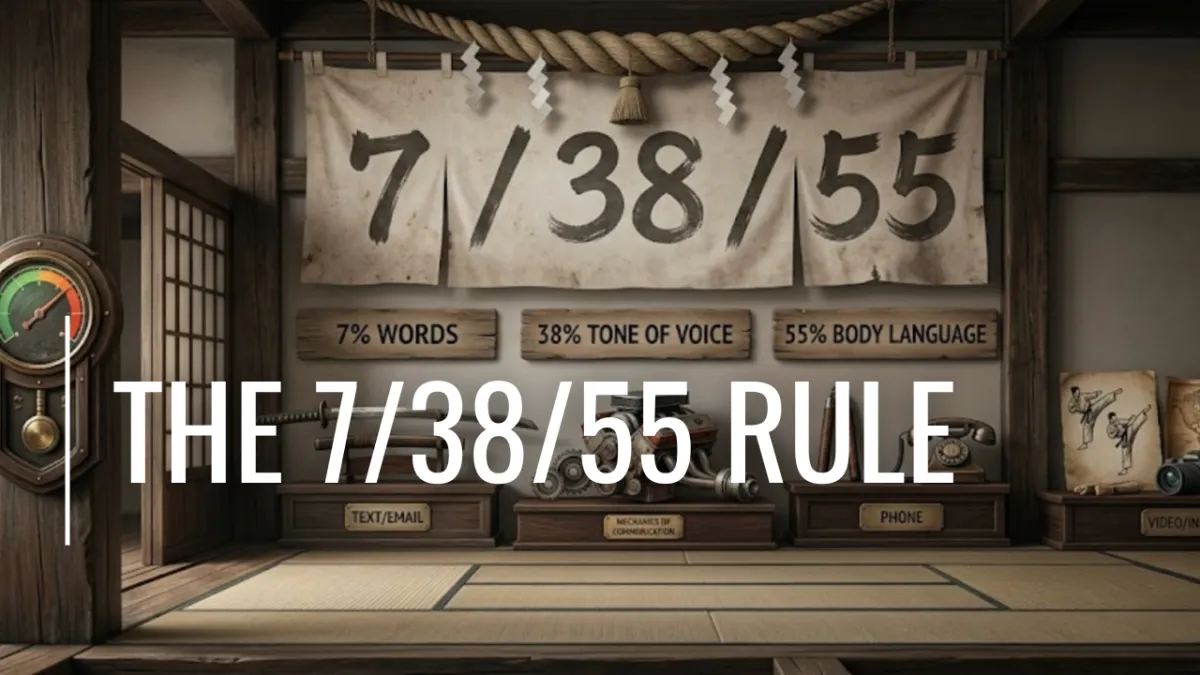
He broke it down into a famous ratio: 7% words, 38% tone of voice, 55% body language. That's the origin of the "7-38-55 rule" you've probably heard tossed around in sales trainings for decades.
Now, here's the fair and honest version: Mehrabian was measuring how we read feelings and attitudes — basically, "does this person like me or not" — not every kind of communication on earth. He wasn't measuring how well someone explains financing terms. His sample was small, and he's said himself that people have stretched his findings way past what he actually studied.
But here's why salespeople still swear by it: selling a car was never really about the spec sheet. It's about trust. It's about whether the person on the other end of the line believes you actually care whether they drive off happy. And that feeling — trust, warmth, confidence — is exactly what Mehrabian's ratio is about. So while the numbers aren't a science lab guarantee, the principle underneath them is dead-on for our world: how you say it beats what you say, almost every time.
The Channel Changes Everything
Here's where it gets interesting for anyone working sales leads. Not every channel gives you the same amount of "power" to connect.
Text or email: You've only got the words. That's it. Roughly 7% of your influence, if we're using Mehrabian's frame. No tone, no energy, no smile — just letters on a screen that the reader can (and will) interpret however their mood tells them to that day.
Phone call: Now you've got words and tone of voice. That's a huge jump — somewhere around 45% of your full connecting power. A phone call is genuinely underrated.
Video or in-person: Now you've got the whole package — words, tone and body language. This is where you can bring your full self to the table.
Most salespeople treat the phone like a lesser version of meeting in person. That's backwards thinking. The phone is your best tool for volume and connection, if you use it right — because tone of voice alone carries five times more weight than your words.
Yes, You Can Hear Body Language
This is the part people miss. You might think body language only matters when someone can see you. Wrong. Body language leaks straight through the phone line.
Slouched in your chair with your feet on the desk? The customer can hear it — your voice goes flat, your breathing gets shallow, your energy drops. Distracted, scrolling your phone while you talk? They can hear the gaps, the delayed reactions, the "uh-huh, yeah, sure" autopilot voice.
Now flip it. Stand up. Walk around. Smile — an actual, real smile, even though nobody's watching. Here's the wild part: a smile changes the shape of your mouth, which changes the sound of your voice. People can hear a smile on the phone. It's not a metaphor. It's physics.
The most successful people in this business treat every phone call like the person is standing right in front of them. They move. They gesture. They lean forward when they're making a point, even though nobody can see it. That energy travels through the cadence of their voice — the pace, the pauses, the lift at the end of a sentence — and the person on the other end feels it, even if they couldn't tell you why.
Congruence Is the Real Secret
The magic word here is congruence — when your words, your tone, your state of mind AND your energy are all telling the same story. If you say "I'd love to help you find the right fit" in a bored, monotone voice while multitasking, the words lose. The mismatch is what people notice, even subconsciously.
So before your next call, don't just think about what you're going to say. Think about how you're standing. Think about your smile. Think about whether your energy matches the excitement you want your customer to feel about driving home in something new.
Because the truth is, they're not just buying a car. They're buying the feeling of trusting the person who sold it to them. And that feeling gets built in the tone, the energy, and the smile — long before it gets built in the words.